- Coteach.ai
- Posts
- Teaching with Integrity, Not Just Fidelity
Teaching with Integrity, Not Just Fidelity
How Coteach helps you adapt instruction while preserving what makes the curriculum effective

Riz Malik & Jonathan Ben-Isvy
December 02, 2025
We hear it all the time from teachers: "I know I need to tailor this lesson for my students, but I'm worried I'll break something." It's a real tension—and it's at the heart of why educators are increasingly talking about teaching curriculum with integrity rather than fidelity.
Despite significant investment in high-quality instructional materials (HQIM), implementation hasn't always delivered the student achievement gains many expected. But that doesn't mean we should abandon HQIM and return to the days of cobbling together resources from old textbooks and random online searches. Rather, it tells us that having quality materials isn't the same as students being able to access them.

So what's the difference between fidelity and integrity?
Implementation with fidelity suggests a rigid, compliance-based approach—delivering curriculum exactly as written with little room for adjustment.
Implementation with integrity means staying true to the elements that make a curriculum high-quality while empowering teachers to make necessary adaptations. You might adjust instructional strategies, add scaffolding, or tailor instruction to student needs—all while maintaining the intention of lesson activities, keeping learning targets at their intended rigor, and preserving assessments (with appropriate accommodations for students with IEPs or developing language proficiency).
The challenge? Making these adaptations can be hard and time-consuming. You might wonder whether you're undermining the very things that make the curriculum effective. Because Coteach directly aligns to IM® v.360 by Illustrative Mathematics®, you can confidently create access while maintaining quality and rigor.
1. Get Clear on the Lesson's Purpose
Understanding where a lesson fits within the unit is critical for ensuring your adaptations stay aligned to learning targets.
Try these prompts:
"What is the purpose of this lesson?"
"How does what students learn in this lesson build toward what they must know and be able to do by the end of the unit?"
"How does each activity contribute to the lesson learning goals?"
2. Anticipate Student Thinking and Plan Accordingly
There's no substitute for doing the math yourself! Complete the lesson Cool-Down to get clear on how students will demonstrate their learning, then collaborate with Coteach.
Try these prompts:
"What does complete understanding of the Cool-Down look like? What might partial understanding look like?"
"Based on potential misconceptions or errors, what strategies can I use to ensure all students access each lesson activity?"
"What scaffolds can I use so all students can access the lesson? How do I know when to remove the scaffolds?"
3. Use Formative Data to Plan Adaptations
Now you can upload actual student work directly to Coteach—making it easier than ever to get specific, actionable adaptations based on what your students actually need.
Try these prompts:
"Based on these uploaded student responses from the last lesson's Cool-Down, how can I best support my students in this lesson?"
"Several students got questions 3 and 5 of the last lesson's Cool-Down wrong. What strategies can I use to reteach these concepts?"
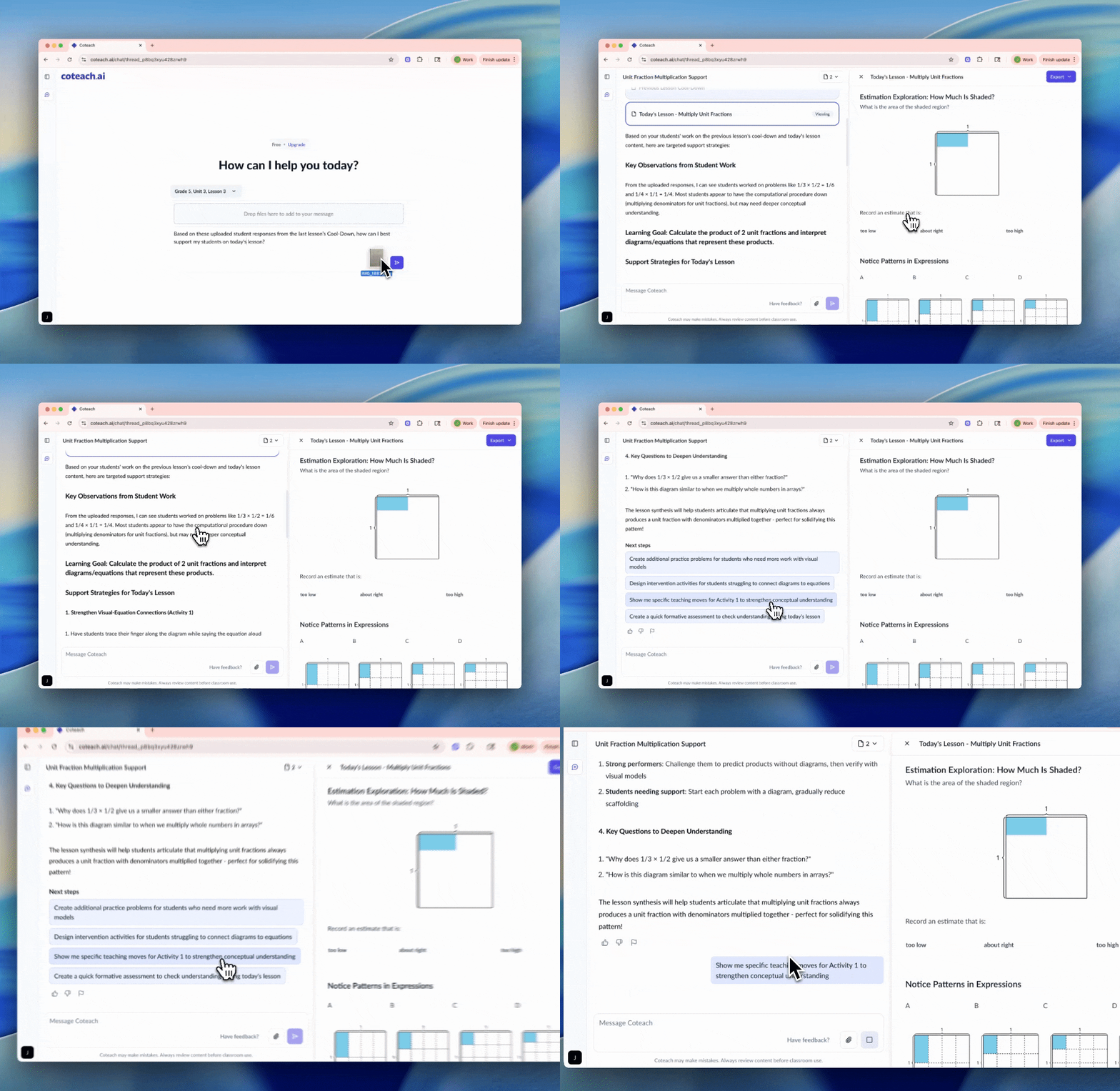
Upload student work from the previous lesson and get specific adaptations based on what your students actually need.
Making thoughtful adaptations while preserving learning targets, core lesson activities, and modes of assessment—that's what integrity looks like in practice. Ready to plan with confidence? Give it a try with Coteach today!